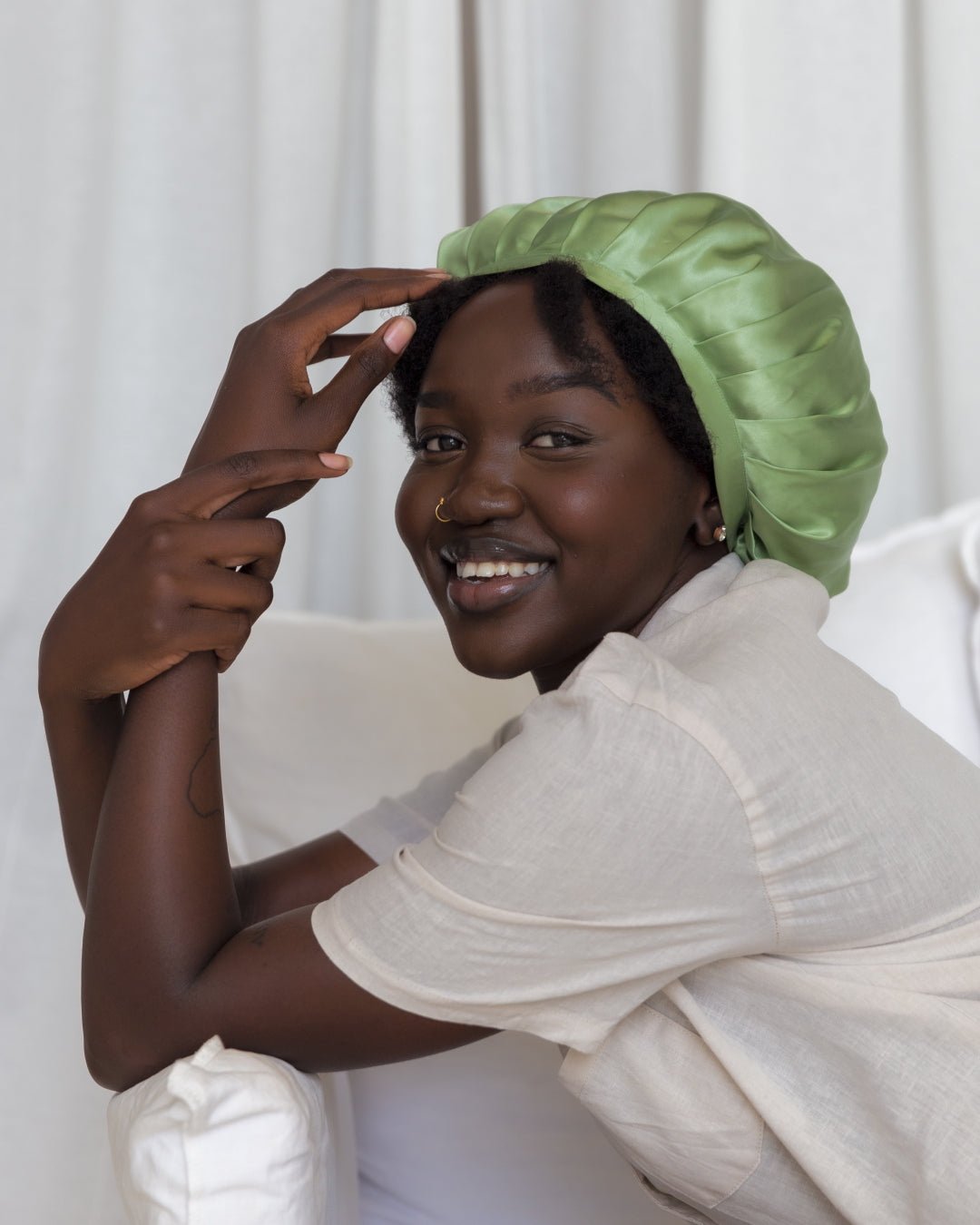

Silk Bonnet for Curly Hair: A Practical Australian Guide
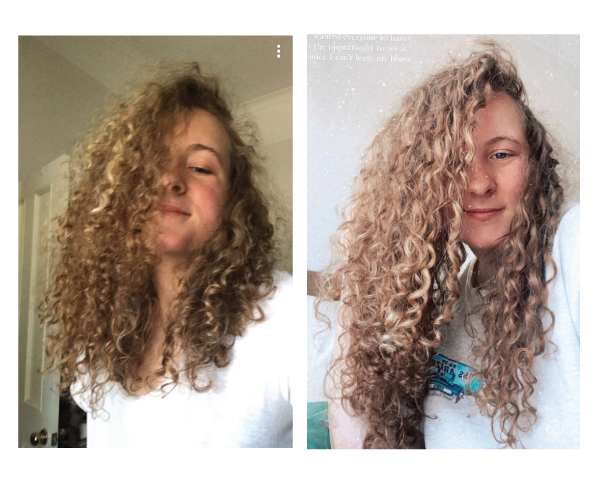
Curly hair takes work. You spend wash day layering product, scrunching, diffusing and waiting, then you go to bed and let eight hours of friction undo a good portion of it. A silk bonnet solves a very mechanical problem: it puts a smooth, soft layer between your hair and your pillow so your curls are not dragged, crushed or dried out while you sleep.
This guide covers what a bonnet actually does, how to choose one for your curl pattern, how to put it on without flattening your hair, and how to build a night routine that works in an Australian climate. Product details such as fabric weight and care instructions vary between brands, so always check the label or product page for the specifics of the bonnet you buy.
What a silk bonnet does for curly hair overnight
Bonnets give your hair a soft layer to protect it from your pillow and from being moved around at night. That protection matters more for curly and coily hair than for straight hair, because the curl pattern is what gives the hair its spring, and friction is what pulls that spring out.
A smooth silk surface reduces mechanical drag, which helps keep the hair cuticle flat and reduces the likelihood of split ends over time.
Silk allows moisture to remain in the hair rather than being drawn away, so curls are less likely to feel dry and brittle in the morning.
The bonnet keeps hair contained, which protects curls, braids and blow-dries while you sleep.
Because everything stays in place, morning hair is easier to manage and needs less re-wetting and restyling.
Silk, satin and the label details that matter
Silk and satin are not the same thing, and the difference is worth knowing before you buy. Silk is a natural protein fibre produced by silkworms. Satin is a weave, and that weave can be made from silk, polyester, nylon or a blend. A bonnet described as satin may feel smooth and slippery, but if it is polyester, it will not behave the same way as mulberry silk against your hair and skin.
If you are buying silk, two numbers are worth looking for. Momme is a measure of fabric weight and density, and grade describes the quality of the silk fibres. At Strands of Silk, the bonnets and pillowcases are made from 19 Momme, 6A grade mulberry silk and are Oeko-Tex certified. We are Australian owned and dispatches from Melbourne, which is useful if you want your bonnet to arrive before your next wash day rather than after it.
Choosing a bonnet for your curl pattern and hairstyle
Most bonnets are designed to suit a range of adults, often with an elastic band so one size covers a lot of ground. The trick is matching the amount of room inside the cap to the amount of hair you are putting into it. A cap that is too tight will crush definition, and one that is too loose will slide off by 2am.
Hair type or style |
What to prioritise |
Why it helps |
|---|---|---|
Loose waves and soft curls (2C to 3A) |
A closer-fitting cap with a gentle band |
Keeps hair contained without pressing the pattern flat |
Springy curls (3B to 3C) |
Room around the crown and a soft, wide band |
Gives curls space to sit without being compressed |
Coils (4A to 4C) |
A roomier cap that holds volume |
Holds natural hair overnight without flattening the coil |
Braids, weaves and locs |
A longer or larger style |
Keeps length inside so ends stay off the pillow |
Rollers or very long hair |
Extra interior room and a secure band |
Holds the set in place through the night |
How to put on a silk bonnet without squashing your curls
Putting a bonnet on is a thirty-second job, but the method matters. Most of the flattening people complain about comes from stuffing hair into a cap from the top down, which compresses the curl at the root.
Detangle gently first. Dry or damp hair both work, but knots left in overnight will set into tangles by morning.
Apply your refresh product as usual, whether that is a leave-in, a curl cream or a light oil on the ends, and let it settle for a moment.
Tip your head forward and gather your hair toward the crown, the way you would build a loose pineapple.
Bring the bonnet down over your hair from behind, with the front edge sitting at your hairline rather than across your forehead.
Tuck any loose ends inside, paying attention to the nape, which is where hair escapes first.
Adjust the band so it holds firmly but does not leave a deep mark, then sleep on your back or side as you normally would.
Sleeping in a bonnet through an Australian summer
Melbourne heatwaves and humid Queensland nights both put a bonnet to the test. The main thing is airflow: a natural fibre like mulberry silk breathes better than a synthetic satin, and a band that is not overtightened lets air move around the hairline. If you run hot, a bonnet paired with a breathable pillowcase is a more comfortable combination than a bonnet alone in a stuffy room, and it saves you from waking up with a damp nape.
Your night routine, step by step
The bonnet is one piece of a routine, not a standalone solution. Build these habits around it and the results compound.
Refresh dry or damp hair rather than soaking it, and give the product a minute to absorb before covering your hair.
Let hair dry before you put the bonnet on. Silk is not designed to sit against soaking wet hair for hours, and doing so can leave the fabric damp and the curls stretched.
Protect the ends. A small amount of oil or serum on the last few centimetres of hair pays off by morning.
Put the bonnet on last, after your skincare and any overnight treatments.
In the morning, lift the bonnet off from the back rather than pulling it forward over your face, then shake or finger-comb the roots only.
Mistakes that undo the benefit
Going to bed with dripping wet hair inside the bonnet, which stretches the curl and keeps the fabric damp.
Pulling the elastic band tight to stop it slipping, which leaves marks and flattens the hairline.
Cramming long hair or braids into a cap that is too small, so the ends end up pressed against the fabric all night.
Never washing the bonnet, even though it collects scalp oils, sweat and styling product.
Ripping the bonnet off in the morning and immediately brushing through dry curls.
Silk bonnet versus silk pillowcase
Both reduce friction and both help hair hold moisture, so it is not really an either-or decision. A silk pillowcase covers the whole pillow surface, which also benefits your skin, but your hair still moves across it during the night. A bonnet stays with your hair and keeps it contained, which is why it tends to hold curl definition better. Many people use both, especially in summer, and a pillowcase is the easier starting point if you are not sure you will tolerate something on your head.
Looking after your bonnet
Silk is durable but it does not like rough treatment. Follow the care instructions supplied with your bonnet, use a gentle detergent rather than anything harsh, and avoid hot water and a hot tumble dryer, which can dull the finish and shrink the fibres. Air drying flat or on a line in the shade keeps the fabric in good condition. A second bonnet is a practical investment if you wear one every night, because it lets one air and rest while the other is in use.
Frequently Asked Questions
Can I put wet curly hair in a silk bonnet?
It is better to let hair dry fully dry before you put the bonnet on. Soaking wet hair inside a cap for eight hours stretches the curl pattern and leaves the silk damp against your scalp. If you wash at night, give your hair time to dry, or use a microfibre towel wrap first and apply your leave-in before covering up.
How do I stop my silk bonnet slipping off overnight?
Most slipping comes down to fit rather than the fabric. Choose a cap with a soft elastic band that sits comfortably around your hairline, tuck the nape hair well inside, and avoid overfilling the bonnet with too much hair. A silk pillowcase underneath gives the bonnet something smooth to rest against rather than gripping cotton and riding up.
Can anyone wear a silk bonnet, or is it just for textured hair?
Anyone can wear one. Bonnets are especially popular with wavy, curly and coily hair because those patterns lose shape quickly under friction, but people with straight hair, blow-dries, braids and extensions use them too. If you have fine or straight hair, a closer-fitting cap tends to feel more comfortable than a large, roomy one with lots of spare fabric.
Will a silk bonnet flatten my curls?
A bonnet flattens curls mainly when it is too tight or the hair is pushed in from the top down. Give your hair room at the crown, place the bonnet over a loose gather rather than a compressed bun, and keep the band gentle. In the morning, lift the bonnet from the back and refresh only the roots and any flattened sections with a little water and product.