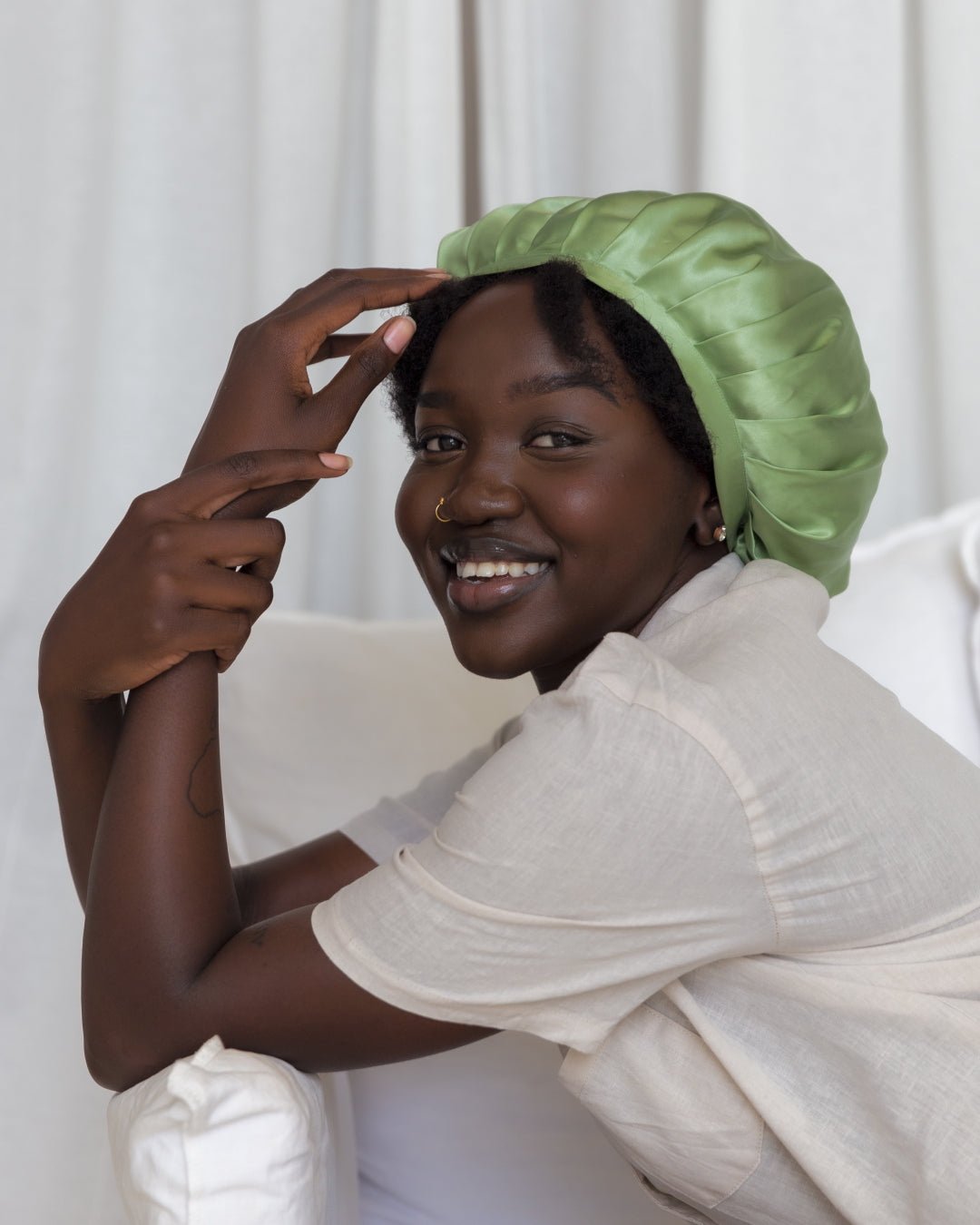


Silk Bonnet for Curly Hair: Guide for Australian Curls
Strands of Silk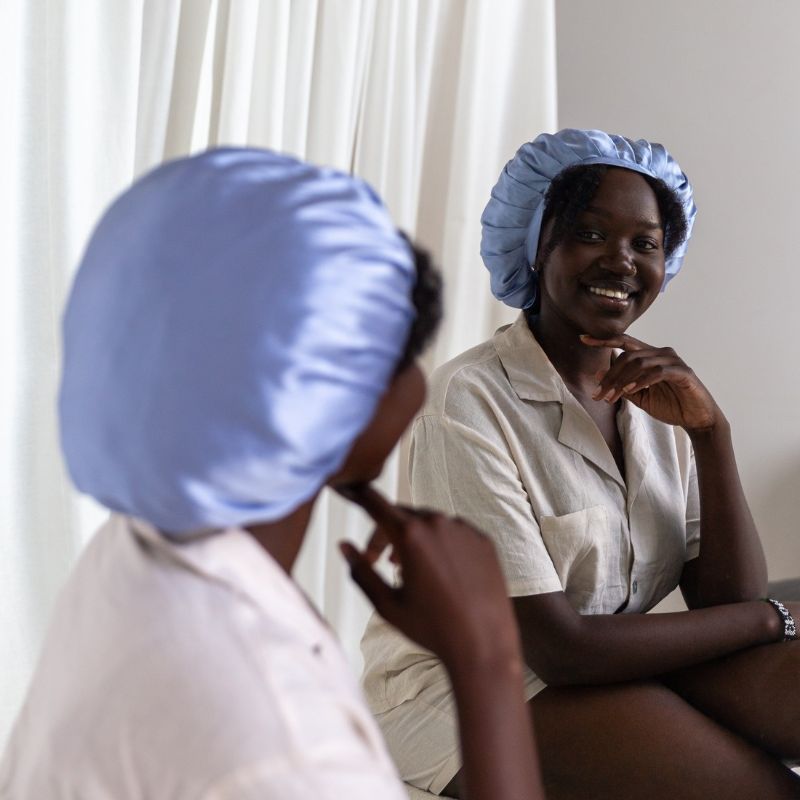
A good curl day usually starts the night before. You can nail your wash day, layer in the leave-in and scrunch until your arms ache, then undo most of it by rolling around on a cotton pillowcase for eight hours. A silk bonnet for curly hair solves that one specific problem: it gives your curls a soft, low-friction layer to rest against overnight instead of your pillow, your doona and your own moving head.
This guide covers what a silk bonnet actually does for curls, how to choose one for your pattern, how to put it on without squashing your definition, and how to look after it through an Australian summer.
Why curls need a different night routine
Curly and coily hair is more fragile and generally drier than straight hair, which is why the protective steps you take overnight matter so much. Bonnets give your hair a soft layer that shields it from your pillow and from being moved around while you sleep. That cushioning is the whole point.
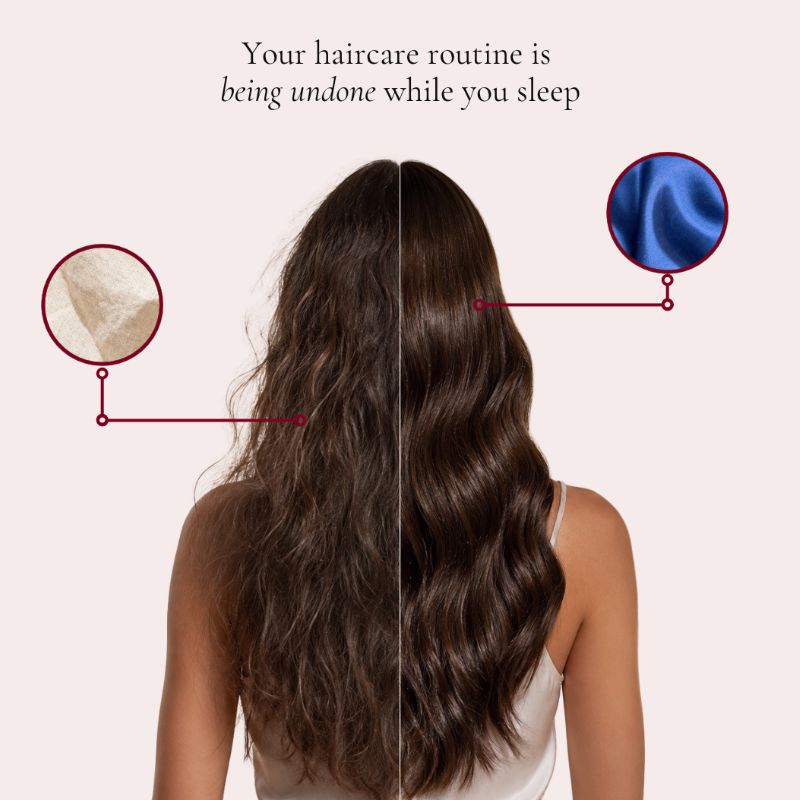
Without that layer, two things happen. First, friction: hair drags against the pillowcase as you turn, which lifts the cuticle and roughs up the curl pattern. Second, moisture loss: cotton and other absorbent fabrics pull water from the hair shaft, and dry hair means frizz, tangles and limp ends by morning. A bonnet interrupts both.
What a silk bonnet does for curly hair
Silk bonnets are not complicated, but they solve several problems at once. Here is what the fabric and the shape are actually doing while you sleep.
It reduces friction and mechanical drag
A smooth silk surface reduces mechanical drag as your head moves across the pillow. Less drag means less roughness on the cuticle, fewer tangles and less breakage at the ends. For anyone who has woken up with one section of curls matted into a knot, this is the most noticeable benefit.
It keeps moisture in the hair
Soft silk allows moisture to remain in the hair rather than wicking it away overnight. That matters because curls need hydration to stay springy and defined. Locking moisture in while you sleep also means your refresh in the morning can be lighter, sometimes just a mist of water and a light scrunch rather than a full re-style.
It protects curl definition and styles
A bonnet helps your hair hold its shape overnight, so the curl definition you built on wash day is still there when you wake up. The same goes for protective styles. A silk sleep cap protects curls, braids, blow-dries and roller sets, so you are not redoing work every morning.
Silk, satin or cotton: read the label before you buy
Satin and silk are often used interchangeably in product listings, but they are not the same thing. Satin is a weave, and a satin weave can be made from silk or from synthetic fibres. Silk is the fibre itself. If the goal is a smooth, low-friction surface that behaves well against curly hair, check the actual composition rather than the word satin on the front of the pack.
Cotton is the fabric to avoid for sleeping on or against curls. It is absorbent, which is helpful in a towel and unhelpful against your hair overnight. If you would rather not wear a bonnet, a silk pillowcase is the next best option, but a bonnet keeps your hair contained rather than free to move across the pillow.
Bonnet feature |
Why it matters for curls |
|---|---|
100% mulberry silk outer |
Smooth surface that reduces drag and holds moisture in the hair |
Wide band |
Keeps the bonnet in place overnight without digging in at the hairline |
Long or roomy cut |
Gives space for long hair, braids, weaves and rollers rather than crushing them |
Lightweight fabric |
More comfortable on warm nights and easier to sleep in |
Choosing a bonnet for your curl pattern
Most bonnets are made to fit a range of adults, so fit is more about how much hair you have than about your curl type. Curl patterns from 3A through to 4C all benefit from the same basics: a smooth surface, a band that stays put and enough room inside the cap.
If your hair is short to shoulder length, a standard smaller cap is usually plenty. If your hair is long, thick, or currently in braids, weaves or rollers, look for a long or jumbo style that has room to gather everything without compressing it against your scalp. A band design is the most forgiving, because it holds the bonnet on without needing to be tied tightly.
One practical note for Australian buyers: check what the bonnet is made from and where it ships from. A bonnet described as silk but made from a synthetic satin weave will not behave the same way, and local dispatch makes a real difference if you are ordering a replacement midweek.
How to put on a silk bonnet without wrecking your curls
The order of steps matters more than the technique. You want your curls gathered gently rather than flattened and shoved upward.
Start with dry or mostly dry hair. If you are refreshing, apply your product and let it settle first so the bonnet is not pressing wet curls flat.
Flip your hair upside down so the curls fall forward and gather naturally.
Use your hands to collect the hair into a loose pile rather than twisting or braiding it tightly.
Place the bonnet over the gathered hair, starting at the back of your head and pulling the band forward.
Settle the band around your hairline so it sits flat and comfortable, not tight across your forehead. Usually pop your ears inside the bonnet.
Tuck in any loose ends around the edges, then check that nothing is pulling before you lie down.
If you use a pineapple or a loose top knot under the bonnet, keep it soft. The bonnet is meant to add a layer of protection, not to compress your hair into a shape you then have to fight in the morning.
Sleeping in a bonnet through an Australian summer
Warm, humid nights are the main reason people give up on bonnets. The fix is usually fabric weight and fit rather than willpower. A lightweight silk bonnet breathes better than a heavy synthetic satin cap, and a band that sits comfortably will not make you overheat or wake up wanting to rip it off at 2am.
Air conditioning creates the opposite problem. Cool, dry air overnight can leave curls feeling parched by morning, which is another argument for a fabric that lets your hair retain moisture rather than pulling it away. If you are travelling, a bonnet packs flat and weighs almost nothing, which makes it an easy item to bring along for hotel pillows.
Caring for your bonnet
Silk needs gentler handling than cotton. Follow the care instructions on the label, wash it regularly enough that product build-up and oils do not transfer back onto your hair, and let it air dry rather than putting it through a hot dryer. Many people keep two bonnets in rotation so one can be washed while the other is in use, which is especially handy if you sleep in one every night.
Common mistakes to avoid
Pulling the band too tight across the forehead, which leaves a mark and can feel uncomfortable by morning.
Stuffing long hair or braids into a cap that is too small, which crushes the style you were trying to protect.
Buying on the word satin alone without checking whether the fabric is silk or synthetic.
Putting the bonnet on over soaking wet hair and expecting definition to hold.
Skipping the bonnet on "just one night" and undoing a week of good curl habits.
Frequently Asked Questions
How do I wrap curly hair in a silk bonnet?
Flip your hair upside down, gather the curls loosely with your hands and lower them into the bonnet. Pull the band forward over your hairline and settle it flat rather than tight. Tuck in any loose ends around the edges, then check in the mirror that nothing is pulling before you get into bed.
Should I sleep in a silk bonnet every night?
Most people with curly or coily hair benefit from wearing one nightly, because the protection only works while it is on. Consistency is what makes the difference to frizz and moisture over time. If a bonnet feels uncomfortable, adjust the fit or try a lighter style rather than skipping it entirely.
Can anyone wear a silk bonnet, or is it only for certain hair types?
Bonnets are a practical hair-care tool rather than something reserved for particular hair types or backgrounds. Anyone with curls, coils, waves, braids, long hair or a style they want to protect overnight can wear one. The main considerations are fit, fabric and comfort, not hair category.
Will a silk bonnet fit over braids or a pineapple?
A standard cap may be too snug for braids, weaves, rollers or particularly long hair. Look for a long or jumbo bonnet with a roomy cut and a wide elastic band, which holds everything in place without compressing the style. Gathering your hair loosely before putting the bonnet on also helps.
How often should I wash a silk bonnet?
Wash it often enough to remove hair products, oils and perspiration, which will otherwise transfer back onto your hair and scalp. Many people wash their bonnet weekly or fortnightly and keep a second one in rotation. Always follow the care label and air dry rather than using high heat.
A silk bonnet is one of the cheapest changes you can make to a curly routine, and one of the few that works while you are asleep. Get the fabric right, get the fit right, and your morning refresh gets shorter while your curls hold their shape for longer.